History is the events that make up the past. The past is everything that is not happening this very second. Every word you have read is now in the past. There are many theories and examples of how history works. The different types are different in almost every way. They make you think and confuse you until they just click and it all flows evenly through your head. That’s kind of what history is like altogether; it is just one big epiphany. But, the fact is history is full of amazing, miraculous, startling, and downright terrifying things that partially account for who we are as people today.
A mind-boggling subject, history gives us what made us and what shaped us. The present day is like clay. The potter is the past. The potter shapes the clay and molds into a mug or bowl just as history is the mold for the present and the future.
There are four big styles of explaining history. They each describe in their own way what history is and how it should be presented. These styles are unique and contrast each other. They are close to being complete and total inverses of each other. In their own ways they explain history in terms of how it happens and fall just short of predicting how future events tie into place with the present and past. Some seem completely senseless and even outlandish to us, but to others it may be the only way history makes sense to them. They are preferences, more or less, as to how your mind sees history and explains it to you.
The first type of history is linear history. Explained as a timeline linear history is made up of the past events following in sequential order by the dates on which the events occurred. For instance, on a certain timeline, the Eiffel Tower is built first, followed by the attacks on September 11th, 2001; followed by the election of President Obama. The events are categorized by dates and in a very sensible manner.
The next type of history I will discuss is Cyclic History. Cyclic History is rationalized as a giant circle of life and death and everything in between. There is no start and there is no end as a circle is. One continuous diagram of history, cyclic history is believed to give no real ending to life. Your are born, you live your life, you die, you are reborn, live a life, then die. It is very confusing in that you are never actually dead, just reborn again. There is no end to life from a distant standpoint.
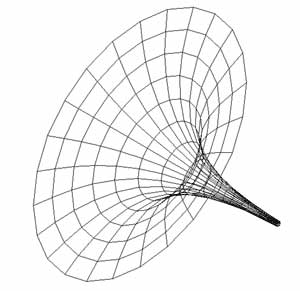
Another type of history is Vortextual History. It was established by a man named Yeats and seems ridiculous, even absurd at first until, like an epiphany, it clicks in your mind as if you invented it and understood it more than anyone else.
Vortex history is shown as a vortex or funnel that looks more like a crude drawing of a tornado done by a first-grader unable to even scribble properly. But really it is a very interesting perspective of how time works. Picture a swirl that spirals outward as it grows further up. Now picture they very bottom, the very smallest part, as the beginning of time. As the spiral swirls up and out it is as if each new layer is another dimension of time added to history. This spiral builds up until it reaches its maximum point and then dwindles down again at the end of time.
The last type of history I will describe is the kind I think makes most sense. Hegelian History. The Hegelian Theory of History was developed by Georg W. F. Hegel. His theory is that the Thesis plus an Antithesis equals Synthesis. It is a system of history in which events occur because of previous events. Much like cause and effect, Hegel History explains that the present and future is defined by the events that occurred in the past.
Hegel’s theory of history in terms of the present seems most sensible to me because it is not far-fetched like death and rebirth, but it accurately describes what I think happens in real life. If you lose your pencil and your teacher announces that you are going to be taking a test the event that would occur from those events is that you are unprepared and have to borrow a pencil or cannot take the test and receive a zero for it. Then, if you take it a step farther, the next possible events are that you fail the class and have to make it up in summer school and you are grounded for the whole summer. The list goes on and on of the events that could possibly occur from the previous ones.
Hegel not only describes history in his own way, but in a way that I believe to be logical and realistic. It conforms to reality in ways that are so exactly alike it has to be the most believable. History is not a giant circle that repeats itself with birth and death followed by birth again. You only live once. History is not a funnel either. You cannot measure history with a spiraling tower that gets bigger as time goes by. History must be explained. It is an event that causes more events that occur later. History is not a straight line either. It can be displayed as one, but it has to have some sort of explanation to it. That is way Hegel’s theory is most sensible. You have to explain why events occur and that answer comes from previous events whose answer comes from the events before those, etc.
In my mind, Hegel hits the target right on with his groundbreaking theory and it dominates over all the other examples. Georg Hegel was a revolutionary man who found a logical way to describe history and I think that is not only a great accomplishment but a noble way to be remembered.

i agree that Hegalian is the best history. Good job
ReplyDeleteWatch making generalizations like "that may seem outlandish to us" -- for, you never should assume that your reader is going to be of the same mindset as you.
ReplyDeleteAlso, this feels rushed and unedited. Please refrain from turning in unedited work.
3.1